Filed under: not found.
A specimen cabinet makes a quiet promise. Everything has a place. There is a name below the wing, a number beside the shell, a drawer for the things that belong together. Strange Natural History starts with that orderly feeling, then introduces specimens for which the drawer has not quite been built.
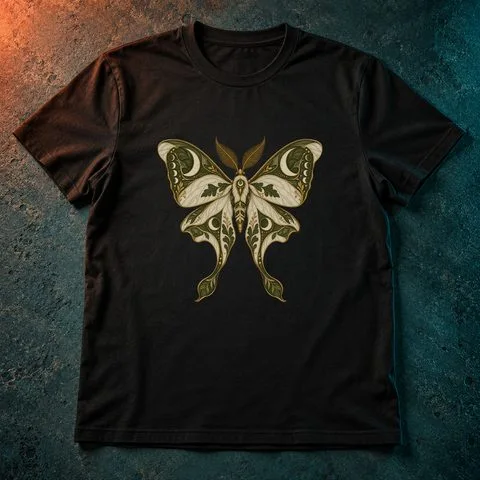
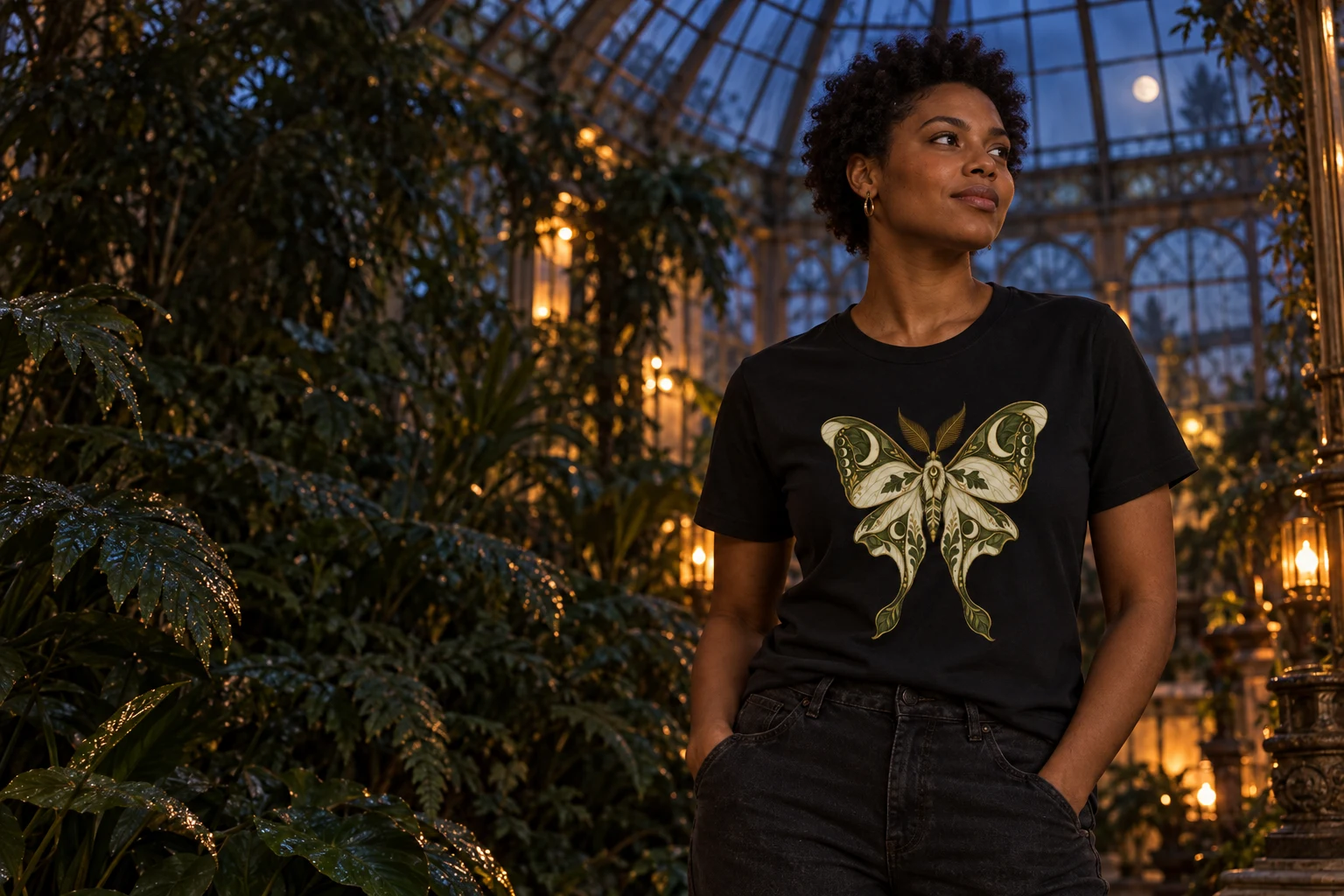
The Lunar Moth has the symmetry of something you might expect to find illustrated in an old book. Look closer and its cream wing panels become crescents. Botanical details curl through the surface. A familiar creature and a familiar celestial shape occupy the same outline, neither one entirely giving way to the other. It is an imagined specimen, made to reward attention rather than certify a discovery.
Borrow the grammar, change the sentence.
Botanical drawings, natural-history plates, and glass displays share a way of asking us to slow down. Fine lines suggest that there is more to see. Repetition makes small differences matter. A contained world invites you to inspect the edges. These are visual habits, and they work just as well on an impossible subject.
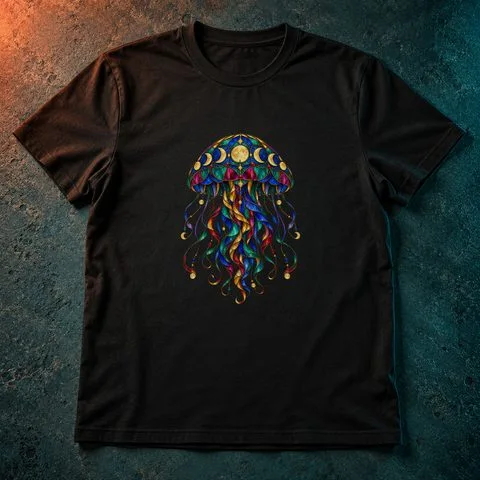
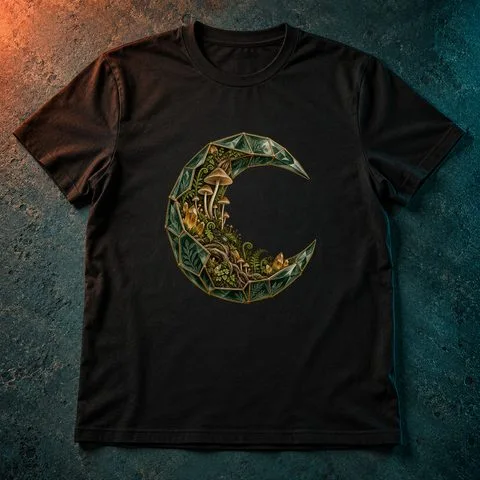
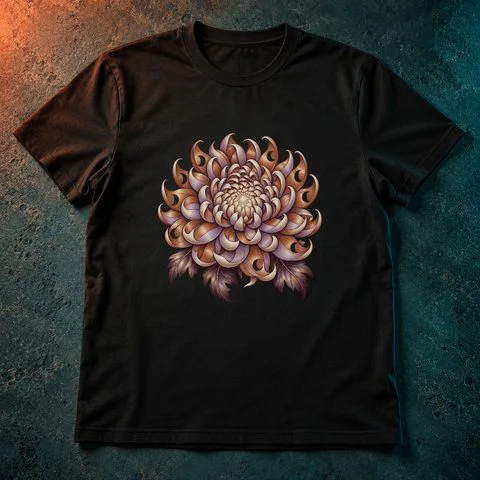
Cathedral Jellyfish borrows the delicacy of glass and the upward feeling of architecture. Lunar Terrarium puts an entire little elsewhere behind a dome. Astral Bloom lets a flower become an event. The collection follows the logic of illustration rather than the rules of a field survey. Its organisms are original inventions, not photographs of rare species.
The night glasshouse.
For the campaign, we placed the moth tee in an imagined glasshouse at blue hour. Dark leaves repeat the artwork's botanical language; warm lamps pick up its cream details. The Moon appears through the roof as part of the scene's atmosphere. The shirt remains a small, readable object inside a larger invented environment.
That relationship is useful. The setting can be lush without requiring the garment to compete with it. Intricate designs need some calm around them. A black tee gives the pale wings an edge. Space around a specimen lets the eye return to its details. Sometimes the most effective composition is the one that gives an interesting thing enough room to be noticed.
An invitation to notice.
You do not need to identify every detail for a design to work. The first encounter might simply be a pale moth. The second is where the crescents appear. On the third, a botanical curl looks a little less botanical than before. The object becomes a reason to keep looking, without assigning you an answer.
That is the collection's version of a field guide: not a list of findings, but a habit of attention. Follow a lunar myth into the story archive. Take an actual walk under an actual night sky. Let the invented specimen remind you that familiar shapes still have room inside them. The label can stay unfinished for a while.