THE MOON IS WEIRD / INDEX30 STORIES · 04 SHELVES
THE COMPLETE ARCHIVE
CHOOSE YOUR
RABBIT HOLE.
From the famous footage to the quiet things your own eyes can test. Pick a claim and keep asking better questions.
EXPLORE THE INDEX ↓THEORIES10 STORIES

Is the Moon a hologram?
A telescope catches a ripple. The internet sees a refresh rate. But the projector theory and the prison-planet story aren't even accusing the same Moon.
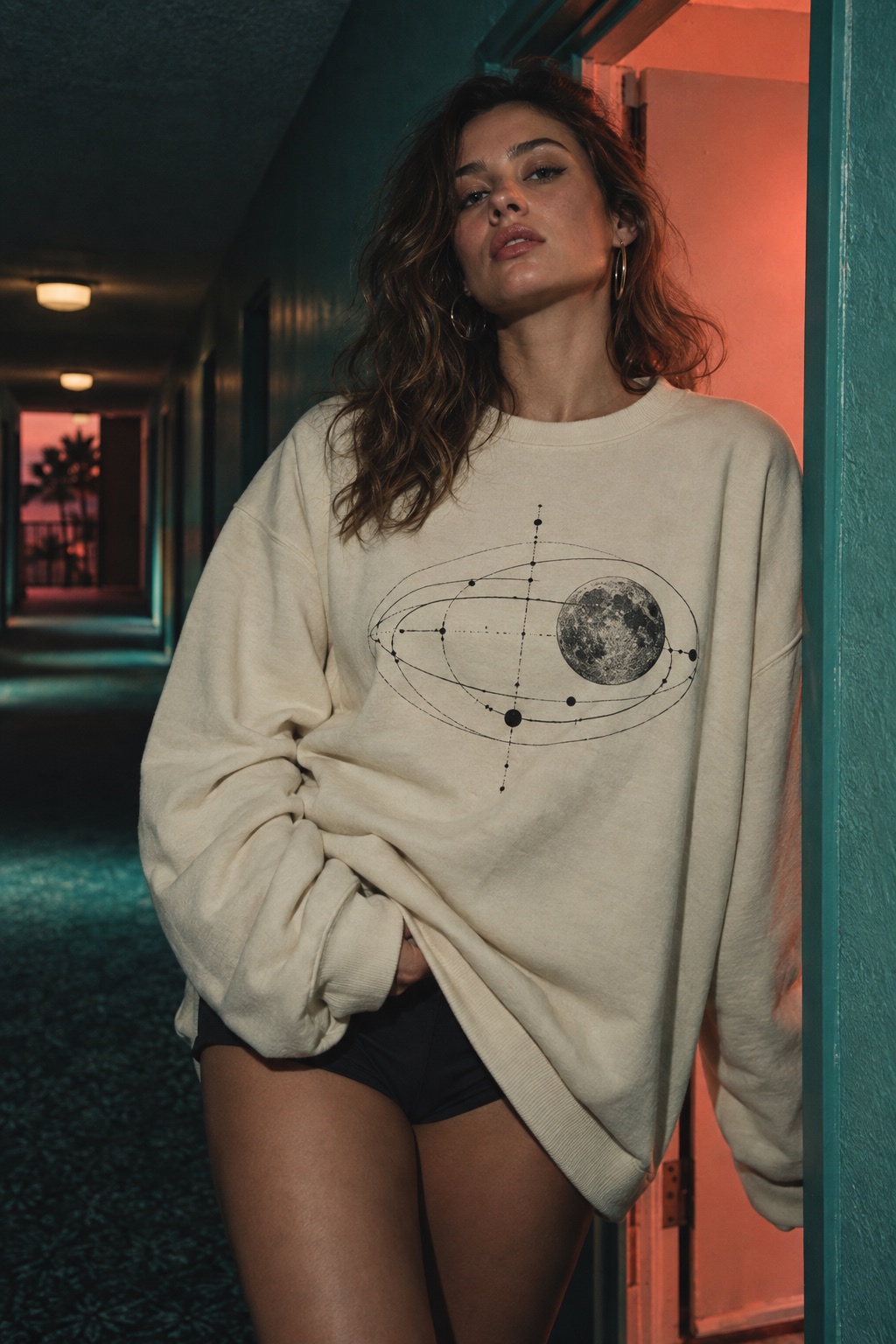
Is the Moon a map of Earth?
What if the lunar face isn't a landscape, but a legend? The map theory gets its turn at the light table.
Who built the Moon?
The hollow-Moon theory has a beautifully simple floor plan. Gravity and geology have an annoyingly complicated one. Let's put them on the same table.
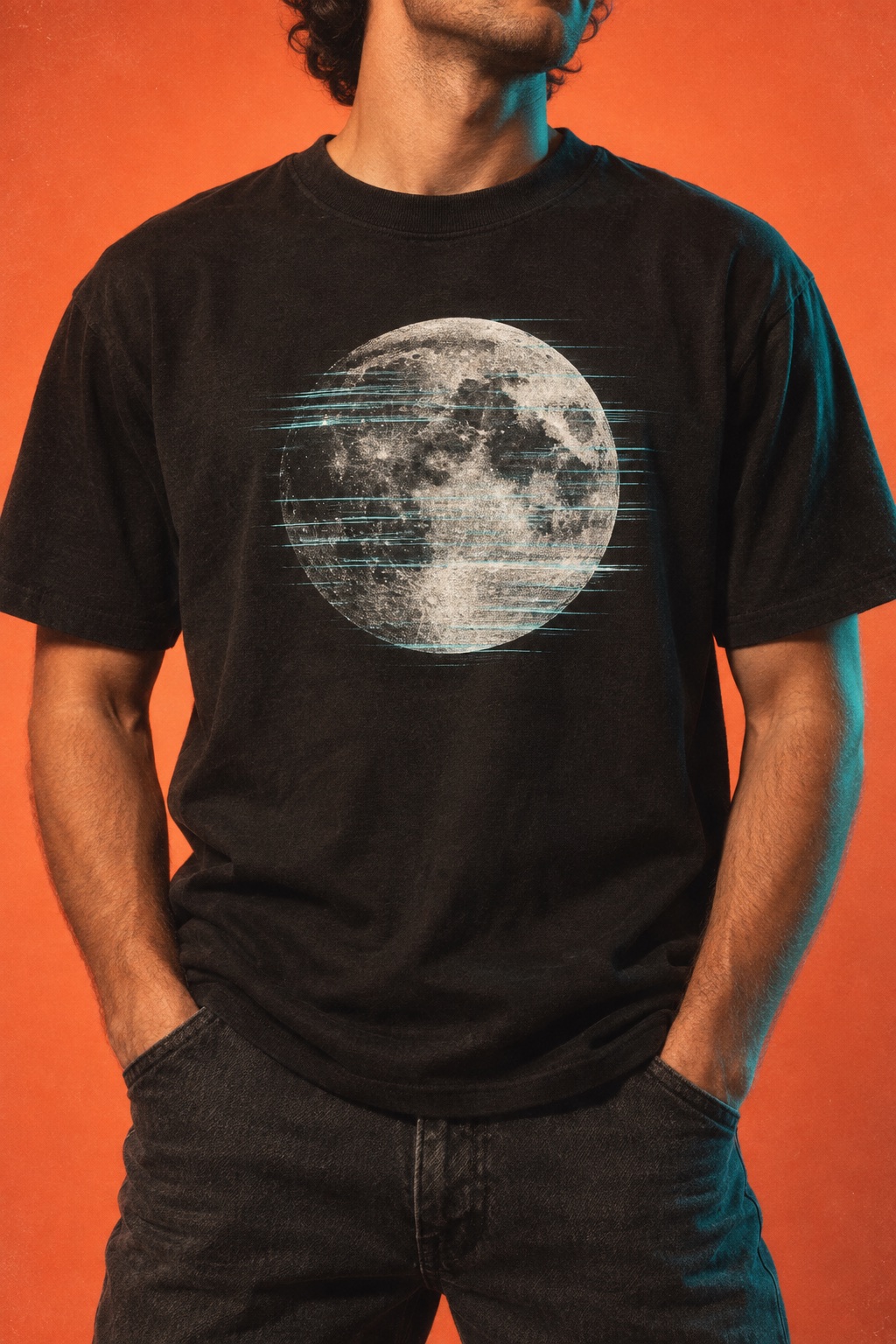
The wave across the Moon
The line. The ripple. The clip that makes a rock look like a broadcast. Follow the signal before you name the machine.
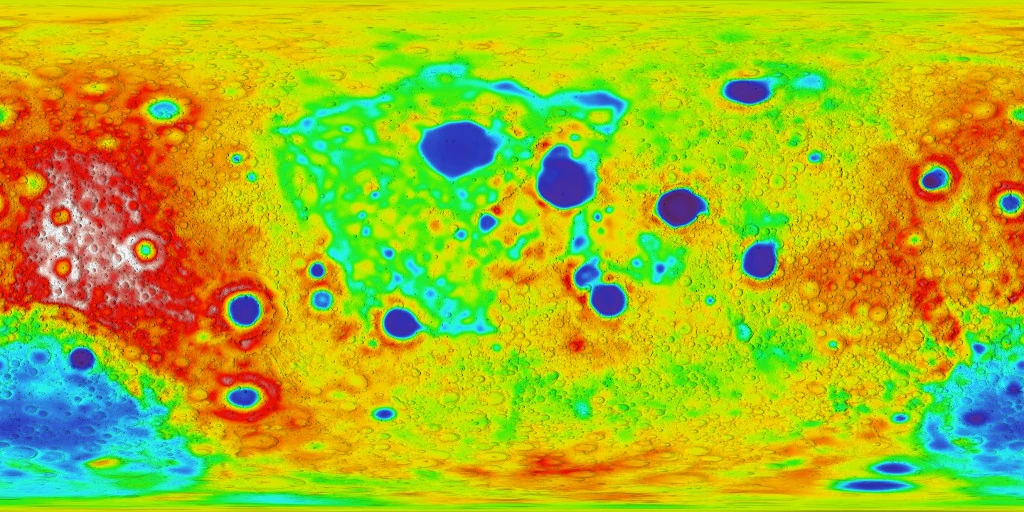
Did the Moon ring like a bell?
NASA threw hardware at the Moon. An instrument kept listening. Then a seismic metaphor escaped the laboratory and bought itself a spaceship.
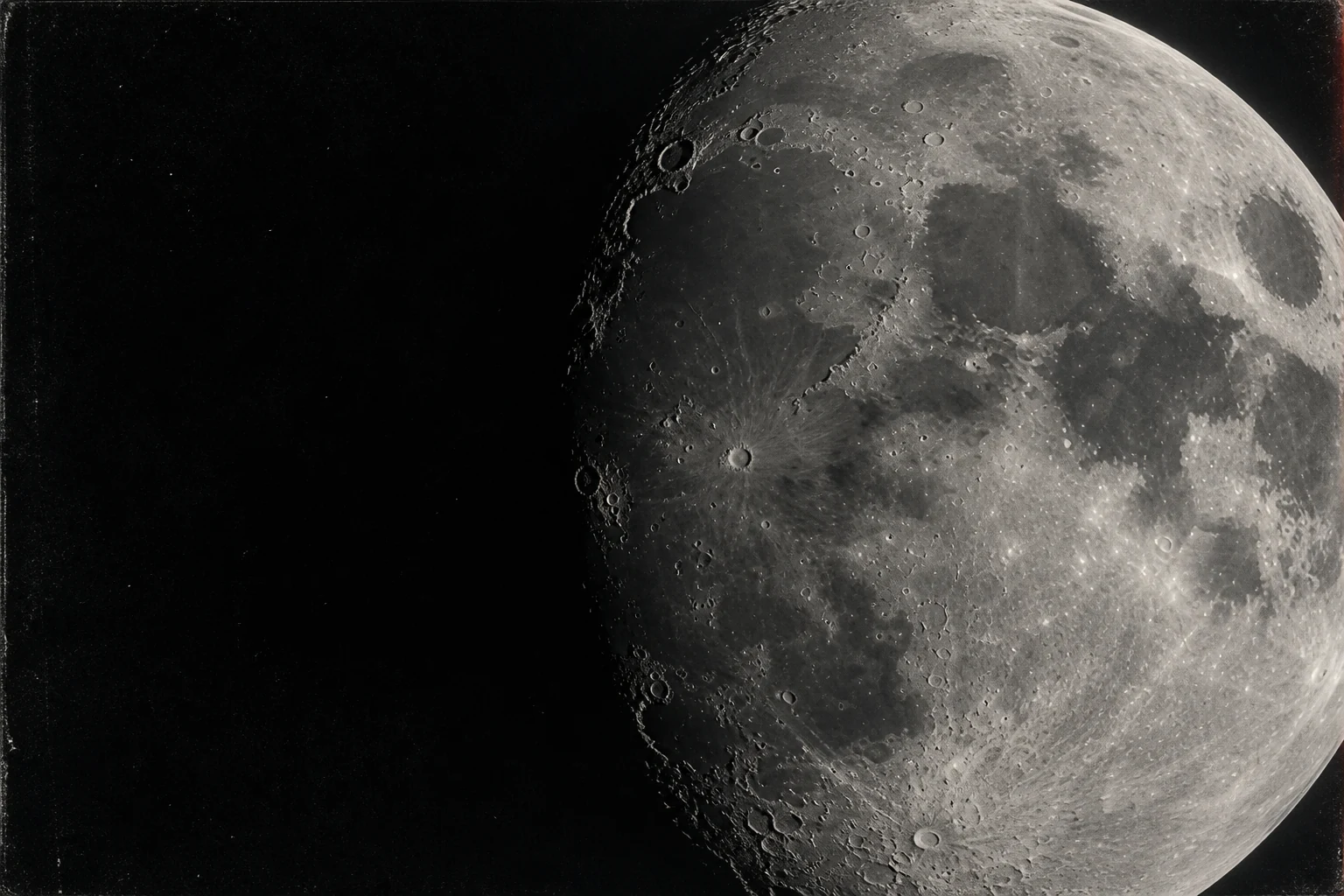
Why are the craters so round?
So many neat circles. So many proposed explanations. Is the lunar surface geology—or workmanship?
Does the Moon make its own light?
It glows like a lamp. What would prove it is one? Follow the changing light instead of arguing about its colour.
Is the Moon much closer than we think?
What if the Moon is much closer than advertised? A nearby light should leave a nearby-light signature.
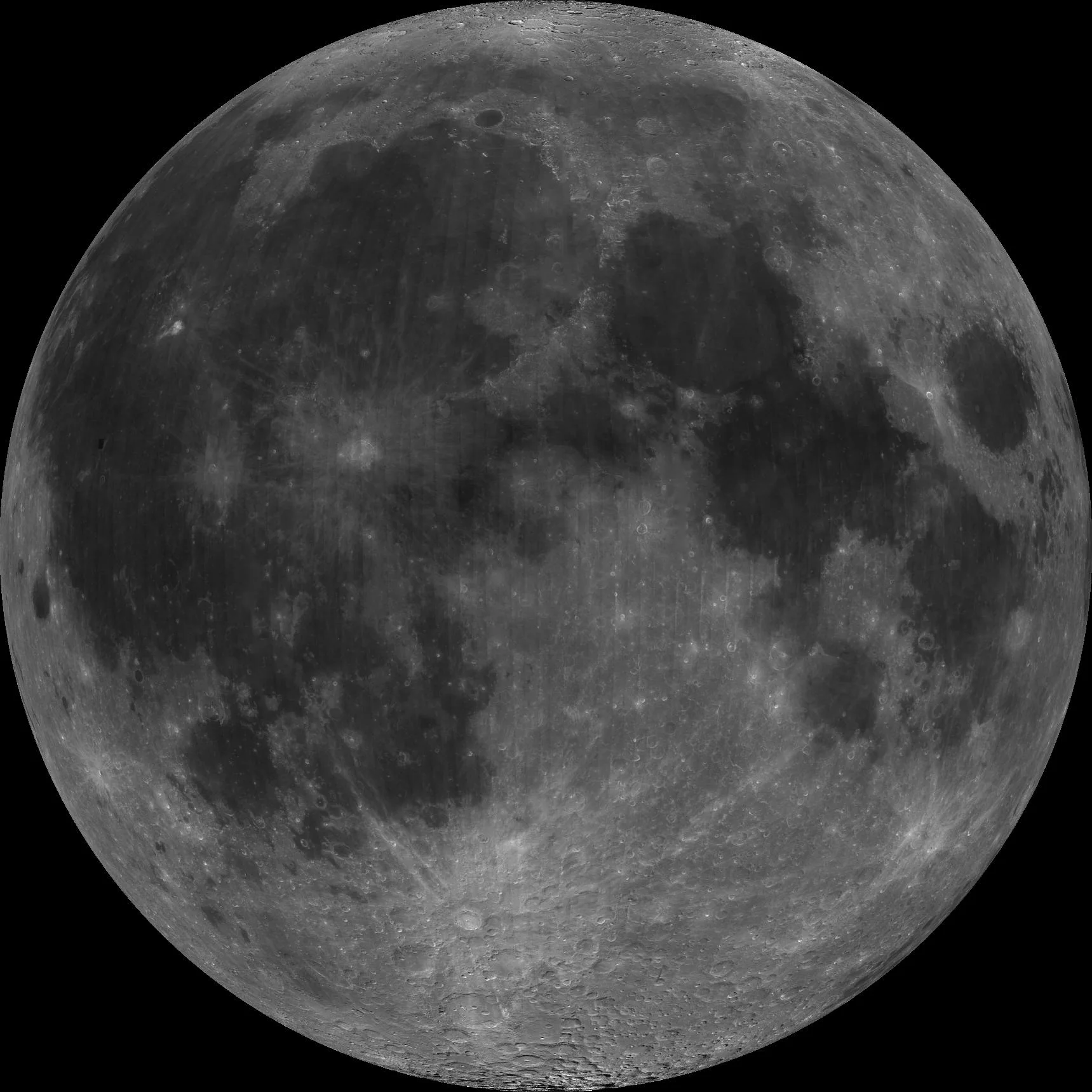
Is there a base in the shadows?
The CIA really investigated remote viewing. Does that turn a story about Moon occupants into an intelligence finding? Here is the missing bridge.
What would a flat-Earth Moon do?
One Moon, several flat-Earth models. Which one can predict the view before the sky supplies it?
APOLLO09 STORIES
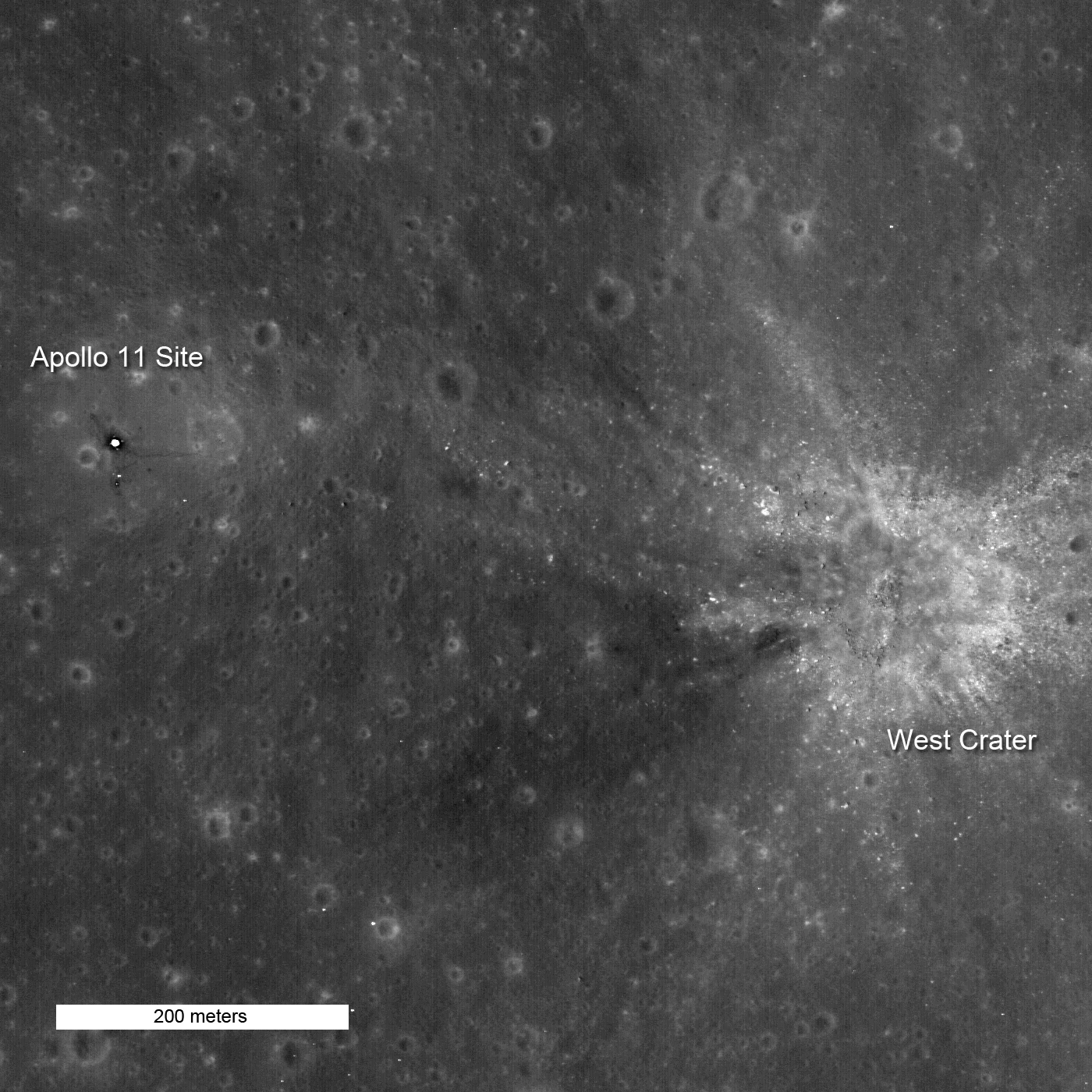
What would prove Apollo happened?
Forget the black sky for a minute. The awkward witnesses are a radio telescope in Cheshire, a Japanese orbiter and an object that doesn't care who wins the argument.
Where did the stars go?
A black sky, a famous director and a NASA lens that really ended up on a film set. The strongest detail in the Kubrick rabbit hole is also the easiest to misuse.
Why did the flag move?
One moving flag. No air. A tiny piece of fabric becomes the prosecution's star witness.
Why do the shadows disagree?
Follow the shadows. If this was a set, the lighting department may have left a calling card.
Could astronauts cross the belts?
If space had a deadly checkpoint, how did Apollo get through? This objection needs numbers, not bravado.
Where is the blast crater?
A rocket lands on dust. Where is the dramatic hole? The missing crater gets a proper scene reconstruction.
What do the lunar mirrors prove?
A pulse goes out. Light comes back. Does a lunar mirror settle Apollo—or just relocate the argument?
Why are lunar footprints so sharp?
A crisp print in dry dust. No water. No breeze. Did the soil behave like a set—or like unfamiliar soil?
Who filmed the first step?
The first man down the ladder has an audience already waiting. Who put the camera out there?
SEEING07 STORIES
Why does the Moon follow me?
You turn. It stays. You drive. It keeps up. The Moon has terrible boundaries—and a geometry problem worth chasing.
The enormous horizon Moon
The Moon rises oversized and everyone says it's in your head. Fine. Let's put a ruler on the sky.
Why does the Moon turn red?
The familiar disc turns blood-red. A warning, a filter, or an alignment? The colour deserves a better story than a caption.
Why do we see one face?
Same face, every night. A natural rhythm—or an object making very sure we only see its good side?
Does the Moon really pull the tides?
The sea moves to a lunar rhythm. Is that evidence of gravity, or the world's largest hidden control system?
How super is a supermoon?
Bigger. Brighter. Breaking news. The Moon has a marketing department, and we would like to inspect its numbers.
Take the question outside
Close the compilation. Open the night. The best lunar rabbit hole starts with a record you made yourself.
MOON LORE04 STORIES
What is on the far side?
The face we never get from the pavement. A perfect setting for secrets—and an increasingly inconvenient place to hide them.
Who switched on the Moon?
Something flashes on the Moon. Impact, instrument, or a light someone left on? Blink—and keep the original file.
Why does every myth need a Moon?
So many cultures, so many lunar stories. A shared memory of something extraordinary—or a shared sky?
Why do Sun and Moon fit?
Two discs meet with theatrical precision. Coincidence, geometry, or a design feature hiding in daylight?
Still curious?
OPEN THE SOURCE-LED FIELD GUIDE ↗