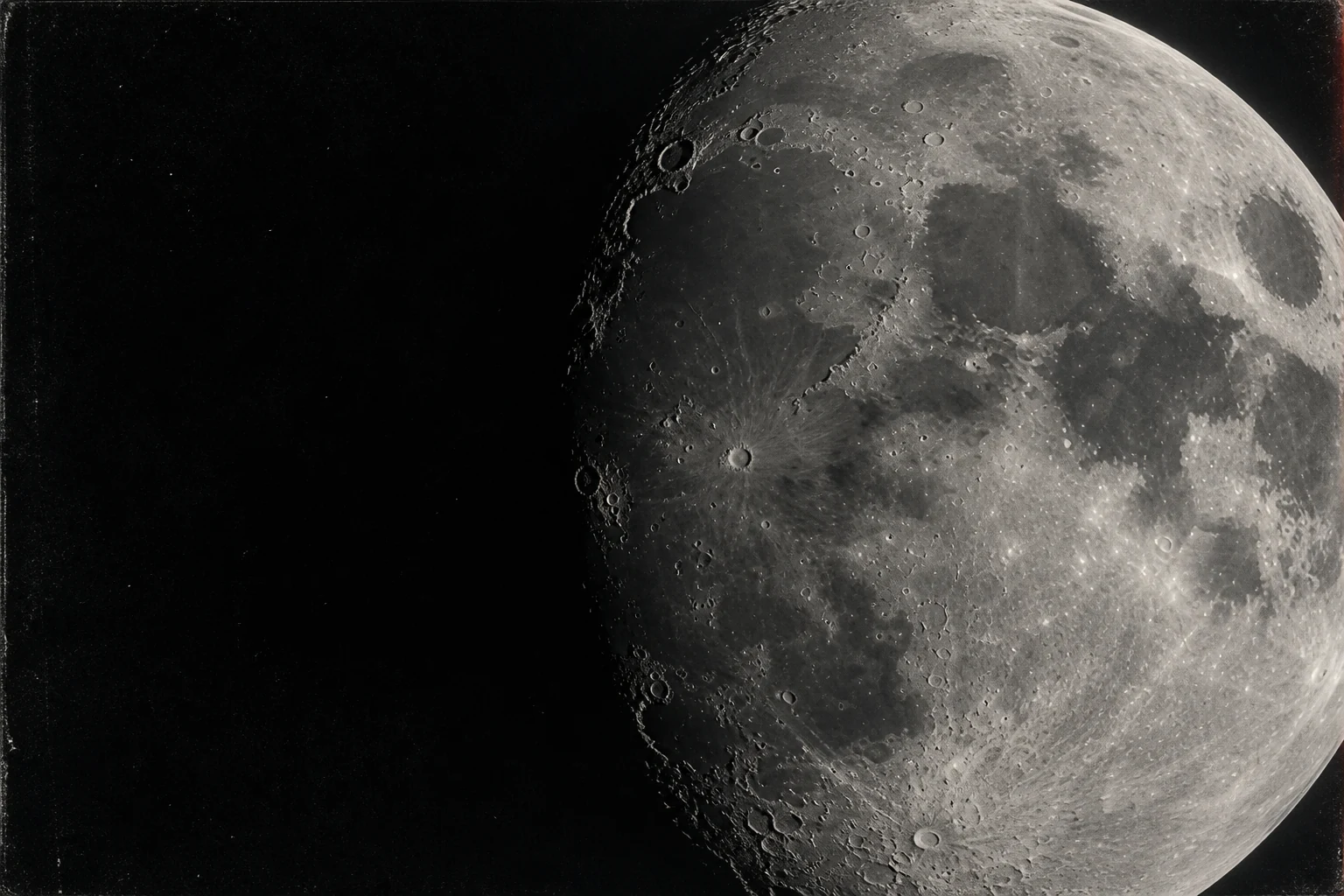
There are two ways to watch a lunar-wave clip. The first is to see atmospheric soup, camera trouble, internet trouble. The second is to feel your stomach drop because the Moon appears to have a refresh rate. Same pixels. Very different evenings. The interesting part lives in the gap between those reactions.
The wave argument asks whether the apparent moving line is an event in the lunar image, not an event inside one recording system. A disturbance that kept its lunar position across independent instruments would make that interpretation considerably harder to dismiss—and still leave its cause to investigate.
The argument being tested—not a claim that the theory has been verified.One line, two incompatible stories.
Crrow777 is the claimant to start with, not an anonymous compilation account. Follow his own publishing trail and distinguish his interpretation from the camera material that would let you test it. A creator's confidence tells you what the claim is. It doesn't tell you where a line entered the image.
The provocative case is wonderfully narrow: perhaps the moving disturbance belongs to the object, not the recording system. That is much more useful than declaring the entire sky fake. It supplies a target. Check the lunar edge, the dark terrain and any control object. Does the effect preserve lunar coordinates, cross the whole frame, or change with the device?
Do not let either camp skip that work. 'Obviously air' is not a diagnosis of an unauthenticated file. 'Obviously projection' is not an optical model. Preserve the sequence, preserve the settings, and ask what each explanation predicts before choosing the thumbnail. This is a signal hunt. The verdict can wait until the instruments have spoken.
Keep the source, lose the leap.
The lunar-wave claim is associated with Crrow777's publishing. The linked site is a route to the claimant's own material; it is not a substitute for an original recording with camera metadata. We have not established a chain of custody for every clip circulated under this name.
That gap matters. Re-encoding, crops and captions can change which explanations you can test. We will not confidently diagnose a sensor, air disturbance or deliberate edit from an unauthenticated repost.
A test with an exit door.
A useful investigation keeps competing explanations alive long enough to discriminate between them. Film with two cameras, include a control edge if practical, and keep the full sequence. If one device records a line and the other does not, that is a different result from two devices recording a matched angular disturbance.
Even a shared disturbance would not automatically establish projection. Both cameras may look through similar air. The proposed mechanism must explain what is shared, what differs and what happens when the geometry changes.
A ripple can be real in a recording without being a physical wave on—or a refresh of—the Moon.
A TEST, NOT A DARE.
Synchronize two recordings and note separation, exposure and frame rates. Publish the uncropped files and a prediction before calling a line a lunar event.
These are suggested exercises, not experiments we claim to have performed.
KEEP A PRIVATE FIELD NOTE ↗The wave is a better mystery when nobody gets to win with a caption. Find the original. Name the control. Follow the disturbance.
THE RECEIPTS / LINKS REVIEWED 25 SEP 2026
THE SOURCE SHELF.
Read the record, including its limits. A link to a claim documents what somebody says; it does not endorse it. Videos and social accounts open on their own sites—no embedded trackers or autoplay.
- Claim context / Crrow777Crrow777 Radio ↗
A proponent's publishing site. Not independent verification or an authenticated original camera file.
- Explainer / NASA ScienceHow to photograph the Moon ↗
Practical observing and camera advice; no purchase is required to begin.
- Video / NASA Scientific Visualization StudioMoon Essentials: Parallax ↗
A labelled geometric visualization, not raw telescope footage.
Open the original source-led case file for the evidence ledger, calculations and observation tools.
OPEN THE FIELD GUIDE ↗