
The sentence sounds like an eyewitness account from a haunted house: somebody hit the Moon, and it rang. You can almost hear it. A hollow metal note moving through an impossible interior. Except the important witness wasn't a human ear. It was a seismometer—and the difference between those two things is where this story gets good.
A hollow shell can vibrate after an impact, so prolonged lunar shaking is a legitimate structural question. But duration alone doesn't specify the material or geometry. The artificial-shell case needs a distinctive seismic prediction, not merely a familiar description of an unfamiliar signal.
The argument being tested—not a claim that the theory has been verified.A crash with an appointment.
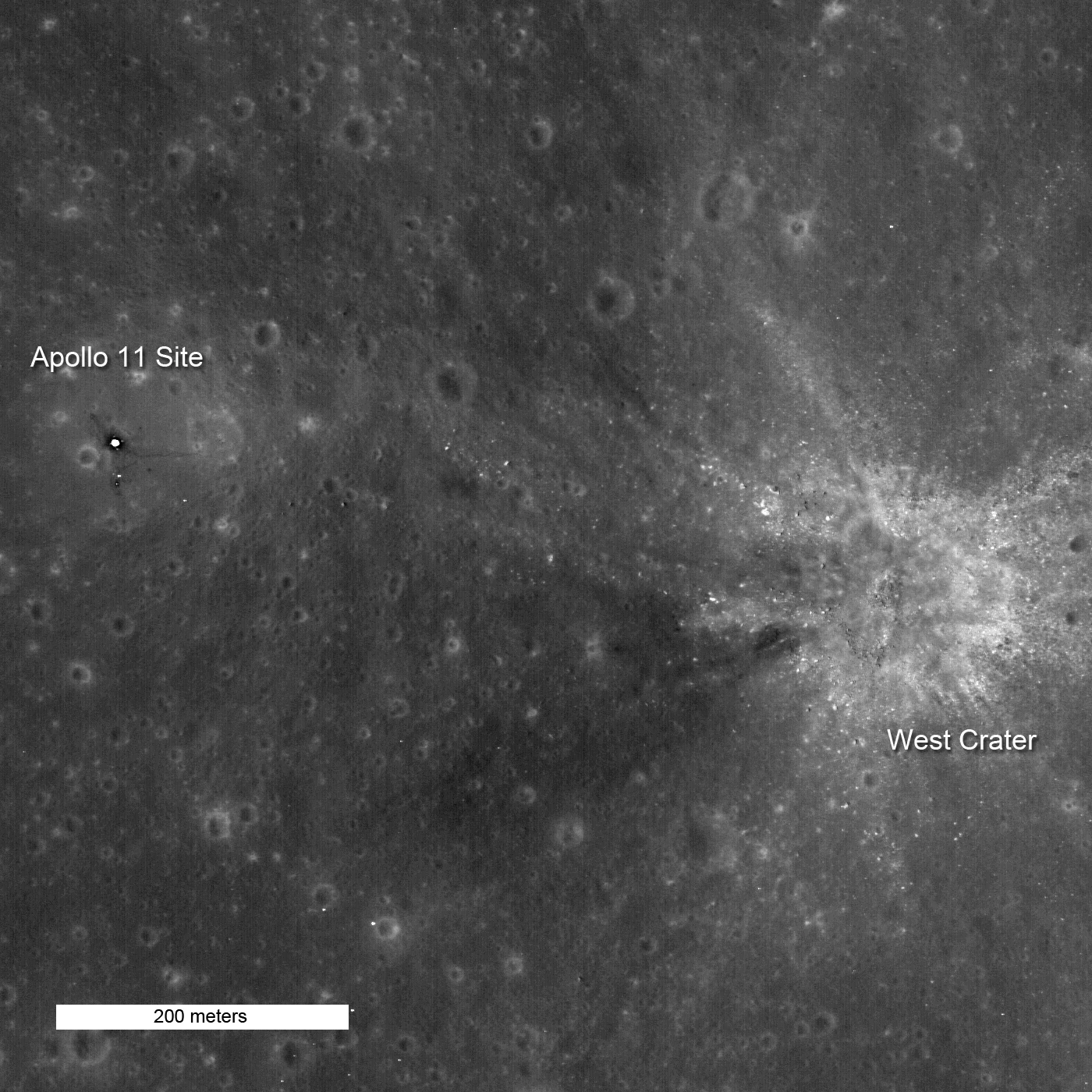
Apollo's discarded hardware was useful because a deliberate impact had something a natural moonquake did not: a source with a known time and location. Hamish Lindsay's ALSEP history records Apollo 12's lunar-module impact on 20 November 1969, roughly 72 kilometres from the landing site. The experiment wasn't a whimsical attempt to knock on a celestial door. It gave an instrument a known disturbance to follow.
The same account describes shock waves persisting for an hour or more and links that persistence to extremely dry lunar rock. We are reporting seismic motion, not claiming that an astronaut heard a tone in the vacuum. You can turn instrument data into sound for illustration; the illustration does not change which physical quantity the instrument measured.
That separation saves the best part of the story. The Moon's response really was unlike the familiar quick fade of many terrestrial signals. The anomaly worth investigating is the measured persistence. We don't need to invent a gigantic audible chime to make it strange.
- 20 NOV 1969
The deliberate impact
Apollo 12's discarded ascent stage supplies a known disturbance.
- AFTER IMPACT
The instrument keeps listening
A prolonged seismic response becomes the memorable bell analogy.
- 1971
The research record
Latham describes the experiment and the need for complementary measurements.
Ten million times louder. Still not audio.
G. Latham's 1971 report describes lunar-surface vibrations magnified ten million times by the ALSEP seismometers. Earth's weather and human activity make such sensitivity difficult there. A signal can be dramatic on an instrument precisely because the environment is quiet and the instrument is extraordinarily sensitive.
The report also insists that seismic data must be combined with physical and chemical rock measurements and other geophysical evidence. That is the part a conspiracy compilation is least likely to put on a T-shirt. It is also the part that prevents a single signal from turning into a fully furnished theory of the interior.
This isn't an appeal to authority. It is a description of how much the original researchers said they needed. The archive asks more of its own explanation than 'it rang, therefore shell.' The shell hypothesis should be willing to meet at least the same standard.
An hour of motion is not an architectural drawing.
THE EDITORIAL DESK
The interior has more than one witness.
In a later Gravity Assist interview, geophysicist Walter Kiefer explains how repeated deep moonquake signals help researchers examine waves that have interacted with the core. He discusses a small core and a layered body, while acknowledging uncertainties. That is a much richer account than imagining that every long signal identifies an empty room.
The strongest version of the shell idea would name a pattern of arrivals, frequencies or attenuation that a specified shell explains better. Merely predicting some ringing gives it a crowd of competing models. Its advantage has to be discriminatory, not poetic.
For us, the unresolved fascination isn't whether the metaphor is catchy. Of course it is. It is how a real, peculiar measurement can retain its mystery after we stop borrowing the wrong sense. The Moon can be geophysically weird without becoming a manufactured bell.
The impact experiments produced prolonged seismic signals. They do not establish an audible metal bell or a vacant interior. Lunar seismology uses timing, propagation and complementary measurements to infer structure; reducing that work to one evocative sentence loses the evidence we actually have.
A TEST, NOT A DARE.
Open the seismic experiment record and label three separate quantities: source event, instrument response and proposed interior. Note which part is directly measured and which is inferred. Do not play a sonified trace as if it were sound recorded in lunar air.
These are suggested exercises, not experiments we claim to have performed.
KEEP A PRIVATE FIELD NOTE ↗The ringing is real as a seismic phenomenon. The bell is a metaphor. The spaceship still needs its own evidence.
THE RECEIPTS / LINKS REVIEWED 26 SEP 2026
THE SOURCE SHELF.
Read the record, including its limits. A link to a claim documents what somebody says; it does not endorse it. Videos and social accounts open on their own sites—no embedded trackers or autoplay.
- Explainer / Apollo Lunar Surface Journal / Hamish LindsayApollo Lunar Surface Experiments Package: seismic experiments ↗
Historical account of intentional impacts, instrument sensitivity and prolonged seismic signals. Not an audio recording of a metal shell.
- Research / USGS / G. LathamResults from the Apollo 12 passive seismic experiment ↗
1971 scientific report; explains the experiment's purpose and limits.
- Explainer / NASA Gravity AssistThe Moon Quakes! With Walter Kiefer ↗
Scientist interview and transcript discussing seismic structure and gravity measurements.
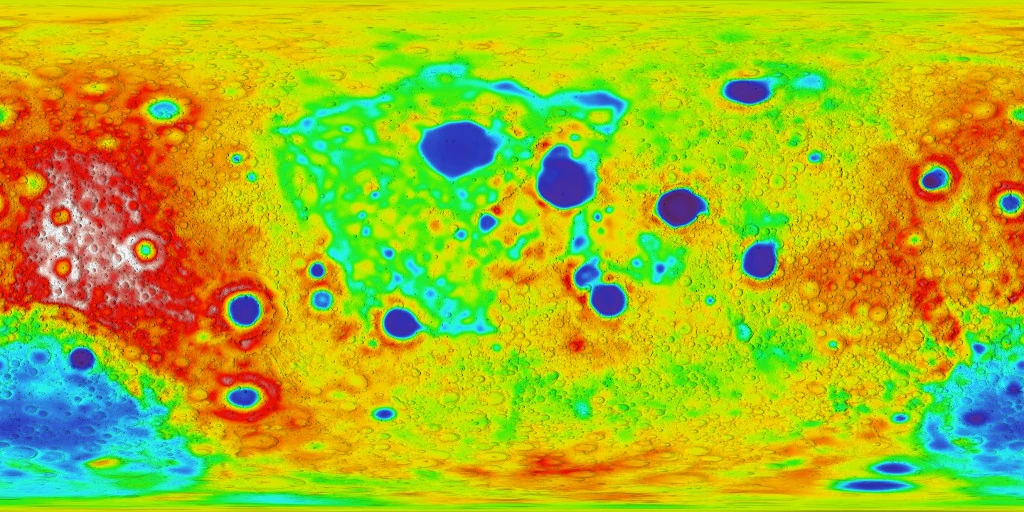
- Research / NASA Advanced SupercomputingGRAIL gravity maps: Moon's crust and interior ↗
Gravity/topography comparison constrains crustal density and porosity. Density inference is model-dependent, not a photograph of the interior.
Open the original source-led case file for the evidence ledger, calculations and observation tools.
OPEN THE FIELD GUIDE ↗