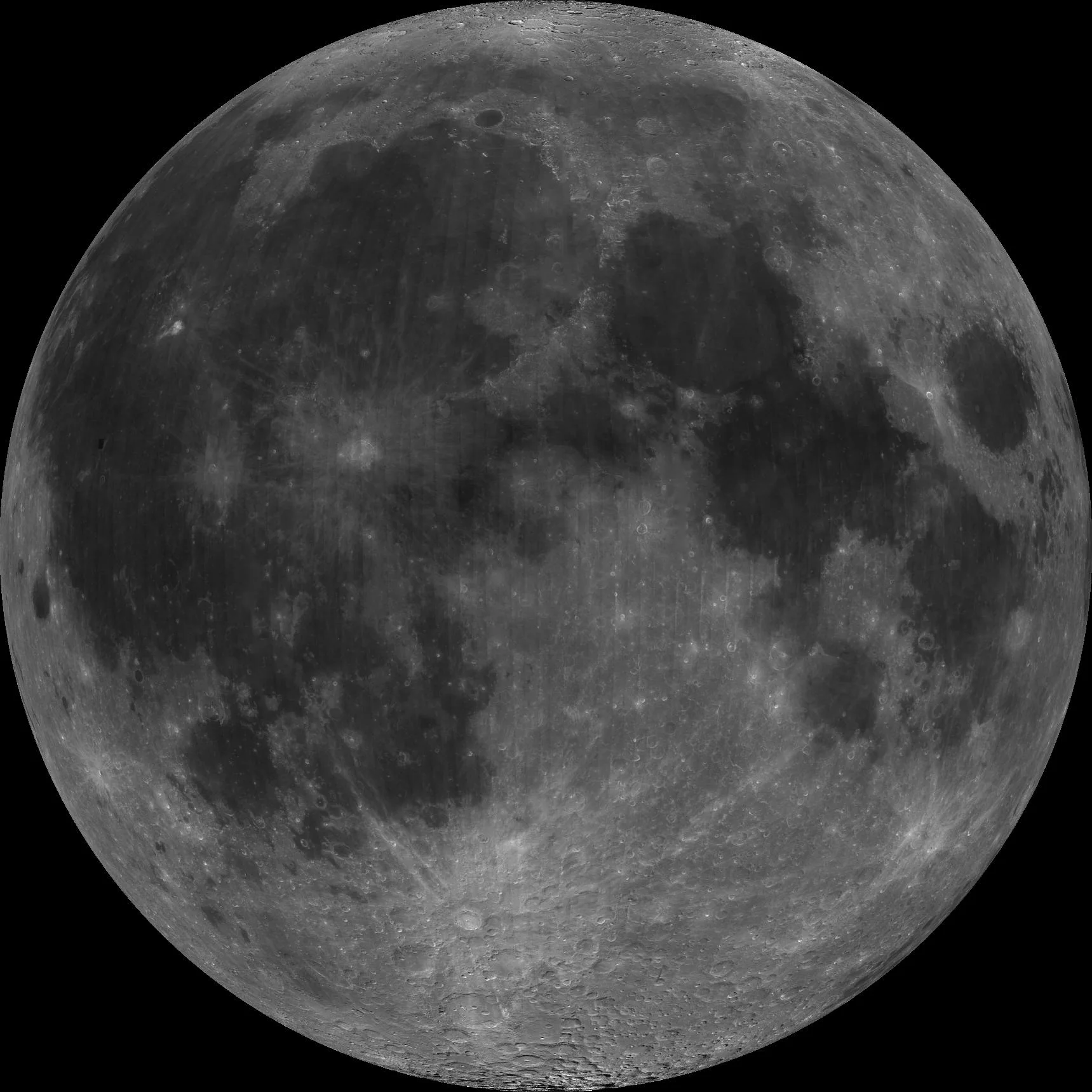

Every familiar thing has a backstage. The Moon's is an entire hemisphere. We grow up seeing one face and are asked to accept that the other one is simply more Moon. No wonder the blank in our everyday view fills up with bases, machinery and somebody else's schedule.
The hidden-base argument has a plausible setting for concealment: a hemisphere outside our everyday Earthbound view. Its next move is to find a persistent feature at a fixed location, rather than treat the absence of a personal view as evidence that something was built there.
The argument being tested—not a claim that the theory has been verified.Backstage is not automatically empty.
The far-side theory has a powerful advantage as a story: its alleged location is outside your routine view. That makes secrecy feel physically plausible. Unlike a blurry light in a public sky, the supposed installation has a place to be. The next step is to give that place coordinates.
Kaguya's public archive release describes lunar terrain and other instrument products. An archive isn't omniscience, and a low-resolution image isn't a building inspection. But neither is the far side a permanently unobserved blank. The honest challenge is to name a feature and compare observations without changing the target between frames.
A shadow can be a lead. A shape can be a lead. A lead becomes a case when another acquisition, a changed Sun angle and an appropriate scale preserve what made it interesting. Backstage deserves a look. It does not deserve a free pass on evidence.
Far is not dark.
Synchronous rotation keeps roughly the same lunar face toward Earth. Sunlight still moves across the lunar surface through the phase cycle. Far side and night side are different geographic ideas.
That distinction removes a lot of accidental mystery without removing the genuinely interesting terrain. An area hidden from an Earthbound view can still be measured by a spacecraft.
Prefer a map to an ominous crop.
JAXA's public archive release describes Kaguya terrain-camera reflectance, elevation and other lunar datasets. Its role here is to show that exploration is not limited to one familiar near-side photograph.
Our reading rule: identify coordinates, instrument and scale before interpreting a shape. A contrast-stretched crater is not an architectural drawing. A claim about a structure should locate that structure consistently in more than one observation.
Far side describes the hemisphere facing away from Earth. It does not mean the hemisphere never receives sunlight.
A TEST, NOT A DARE.
On a globe, mark the side facing Earth and the half lit by a lamp. Rotate the globe once per orbit. Watch those two labels come apart.
These are suggested exercises, not experiments we claim to have performed.
KEEP A PRIVATE FIELD NOTE ↗The hidden face is real. The hidden tenant still needs an address.
THE RECEIPTS / LINKS REVIEWED 25 SEP 2026
THE SOURCE SHELF.
Read the record, including its limits. A link to a claim documents what somebody says; it does not endorse it. Videos and social accounts open on their own sites—no embedded trackers or autoplay.
- Primary record / JAXAPublic release of Kaguya data archives ↗
The 2009 archive release describes calibrated lunar instrument products, including terrain-camera reflectance and elevation data. This release is not a promise that every historical software link remains supported.
- Explainer / NASA ScienceTidal locking ↗
The physical process behind synchronous rotation.
- Explainer / U.S. Naval ObservatoryPhases of the Moon and percent illuminated ↗
Sun–Earth–Moon geometry, phase timing and libration.