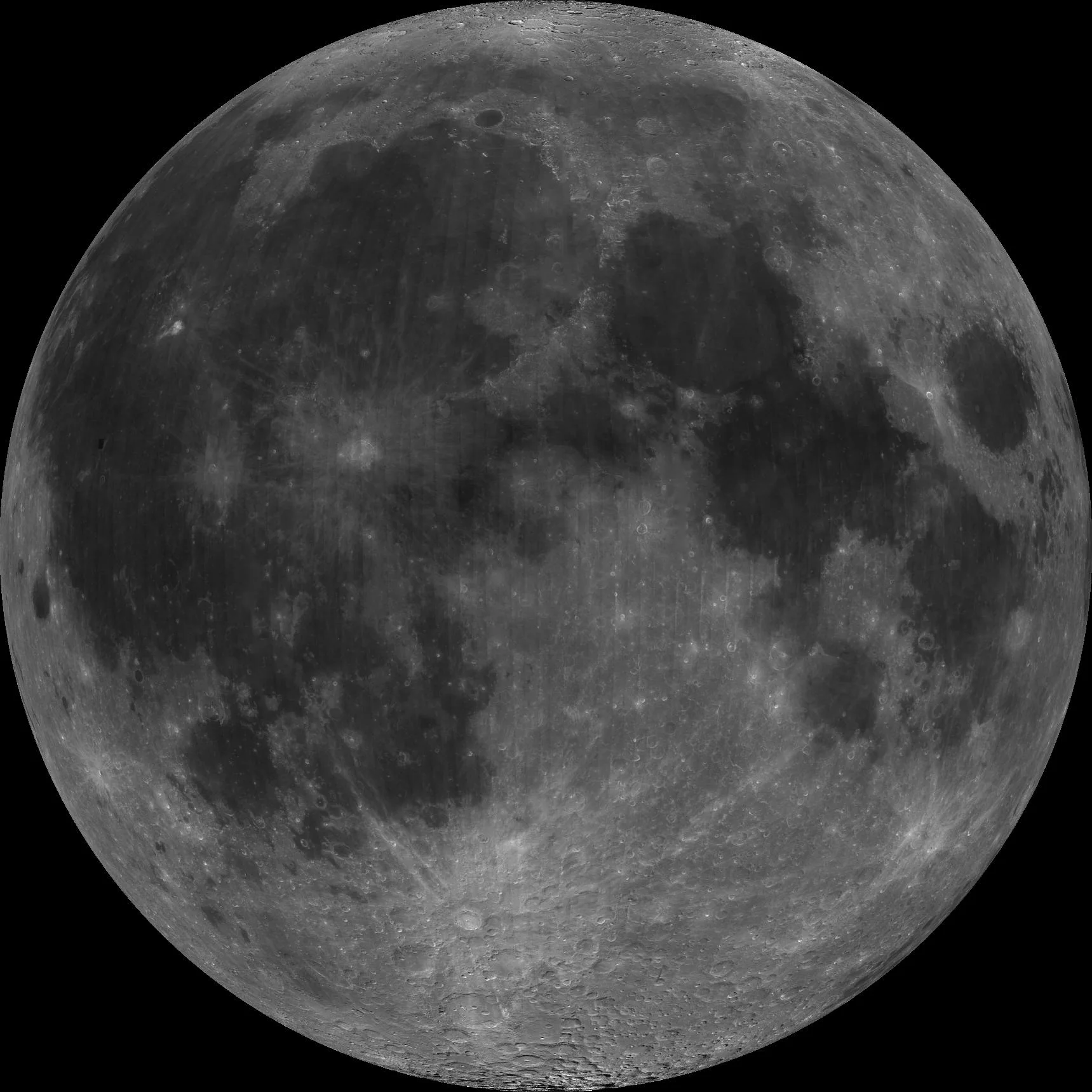

Nothing improves a lunar-base story quite like a document stamp. Add an agency acronym, a blacked-out line and a person who says they saw what nobody could see, and suddenly a shadow on the Moon feels like the least interesting evidence in the room. The archive is real. The question is what, exactly, it lets us say.
A verified remote observation containing specific, independently confirmed lunar information would be an extraordinary lead. A government's decision to investigate remote viewing is not that confirmation. The strongest case has to connect a particular account to a particular checkable target.
The argument being tested—not a claim that the theory has been verified.The real secret is already interesting.
The CIA's own retrospective says it began remote-viewing research in 1972, investigating whether people could describe distant places without going there. It says the work moved to the Defense Intelligence Agency in 1977 and returned for review in the 1990s. You don't have to invent a hidden programme to find a genuinely peculiar one.
This is where a story can make an unnoticed leap: because the institution investigated an ability, a dramatic account involving that ability must be an institutional discovery. Those propositions are not interchangeable. Agencies can investigate something without finding it operationally useful, just as a laboratory can fund an experiment that doesn't establish its hypothesis.
The proper suspense lies in the contents, not the existence, of the file. What was the target? What did the observer say before the answer was known? Which parts matched, which didn't, and who scored them? The paperwork is the beginning of those questions—not a device for skipping them.
- 1972
CIA research begins
The agency's retrospective acknowledges experiments in remote viewing.
- 1977
The programme moves
The CIA account describes transfer to the Defense Intelligence Agency.
- 1995
An operational review
The programme returns for evaluation; CIA decides not to restore it.
The lunar story is another file.
The compilation links Ingo Swann to allegations about lunar occupants. That is the lead we are following, not a claim that we have found a corroborating CIA observation. A narrated personal account and an agency research record can share a protagonist without sharing an evidential status.
The distinction isn't petty. If an astronaut's memoir described something extraordinary, we'd still ask for the mission record and a second witness. A remote-viewing account deserves the same questions. The very thing that makes it a spectacular story—seeing a place without a physical trip—makes the provenance of the target and the account indispensable.
We have not bridged that gap here. The retrieved agency history acknowledges the programme but supplies no confirmation of a Moon installation. Any headline implying 'CIA confirms lunar base' would therefore be manufacturing the bridge it ought to investigate. This magazine can afford a good cliffhanger. It cannot afford a fake document finding.
The programme existed. That is not the same sentence as: the Moon base existed.
THE EDITORIAL DESK
Give the archive permission to disappoint the trailer.
The CIA retrospective reports that remote viewing was too unreliable, inconsistent and sporadic for intelligence use, and says the agency chose not to restore the programme. This is its institutional account, not our claim to have independently replicated the studies. Readers interested in the broader scientific dispute should follow through to the evaluation records it identifies.
There is still a fascinating human story in an institution trying to turn unusual experiences into a dependable tool. A real programme with disappointing operational results is stranger, and more textured, than an invented stamp of approval. It contains ambition, uncertainty and the difficulty of scoring an ambiguous description.
Keep the lunar base in the speculative folder until a particular record moves it. Meanwhile, look at the actual images and mission data rather than giving a silhouette an occupant by default. A dark patch is not a security classification. Sometimes it is simply a place the sunlight has not reached.
The CIA acknowledges a real remote-viewing research programme. Its existence is not evidence of a lunar base. The linked compilation's account of Ingo Swann remains claim context; we have not authenticated the alleged Moon observations through a mission record or independently verified target.
A TEST, NOT A DARE.
For any alleged remote-viewing hit, find the original dated account, an unambiguous target description and the independent observation claimed to confirm it. Record misses as well as matches. Avoid supplying a target retrospectively to fit a suggestive description.
These are suggested exercises, not experiments we claim to have performed.
KEEP A PRIVATE FIELD NOTE ↗A declassified file can prove that somebody investigated a claim. Read the finding before letting the stamp prove the claim itself.
THE RECEIPTS / LINKS REVIEWED 26 SEP 2026
THE SOURCE SHELF.
Read the record, including its limits. A link to a claim documents what somebody says; it does not endorse it. Videos and social accounts open on their own sites—no embedded trackers or autoplay.
- Primary record / CIA History Staff / Ask MollyDid CIA really study psychic powers? ↗
CIA's retrospective account acknowledges its research and unsuccessful operational assessment. This account does not corroborate a lunar base.
- Video / The Why FilesCompilation: The Moon is Weird — No, really. The Moon does not make sense ↗
Owner-supplied editorial lead. English auto-caption transcript reviewed 26 September 2026. A narrated claim is not independent evidence; the compilation also retracts some stories.
- Primary record / NASA / LROApollo 11 landing site from dawn to dusk ↗
Orbital images at different illumination angles. NASA-produced, not independent of NASA.
Open the original source-led case file for the evidence ledger, calculations and observation tools.
OPEN THE FIELD GUIDE ↗