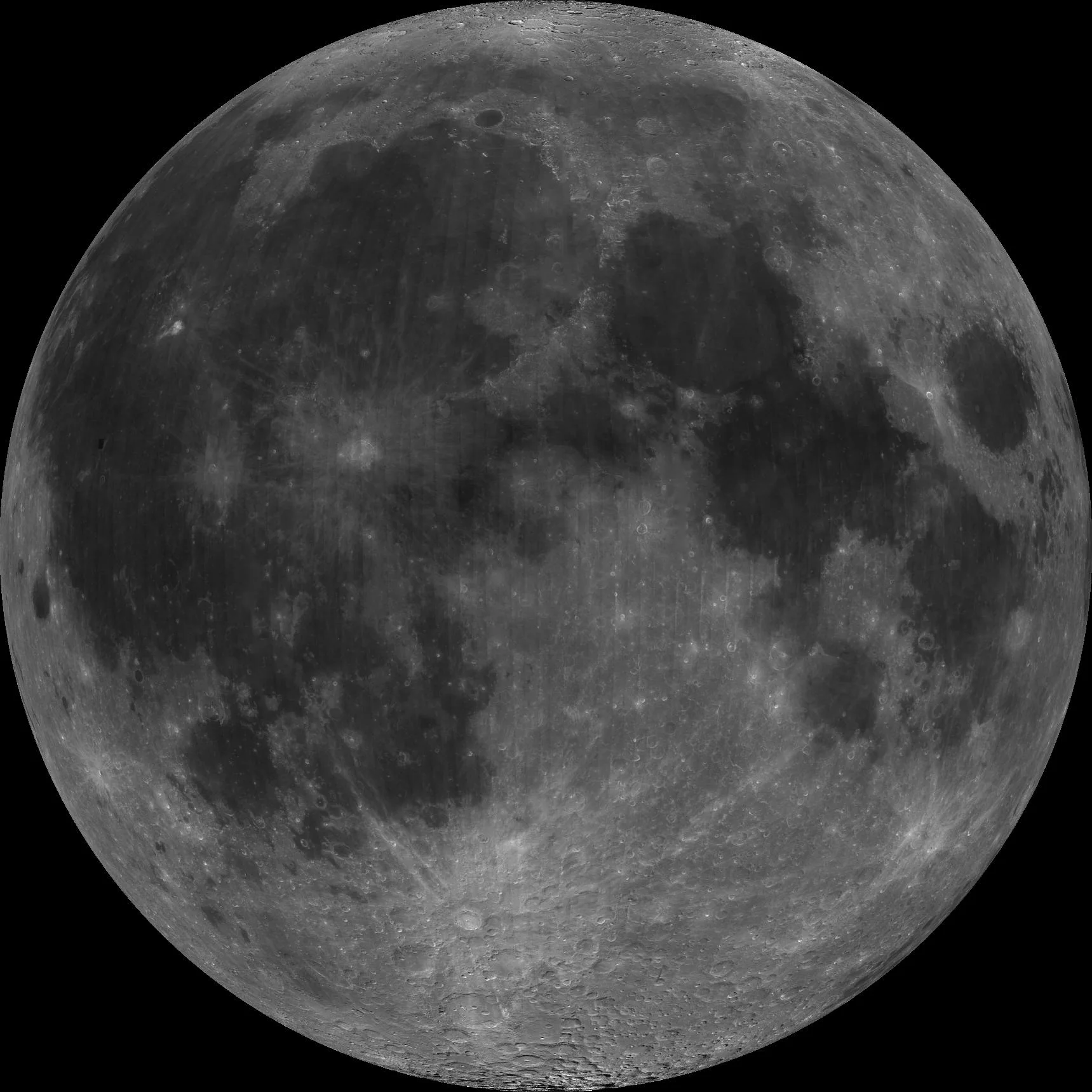

If a stranger kept turning to face you while moving around the room, you'd notice. The Moon does its own version on a much larger stage and we call it normal. The artificial-satellite crowd sees an object keeping its front panel trained on the audience. It's a memorable way to frame a familiar fact.
Deliberate orientation would need observable behaviour that a specified control system predicts and natural synchronous rotation does not. Always seeing roughly one face is the phenomenon both explanations have to account for.
The argument being tested—not a claim that the theory has been verified.The front panel never quite turns away.
Give the design argument its due: stable orientation is something engineers can want. But wanting a behaviour is not evidence that an engineer caused this instance of it. To distinguish intentional pointing from natural locking, ask what the two mechanisms would do differently.
The ordinary account includes a useful wrinkle: libration, the apparent changes that let the lunar edge reveal slightly different territory over time. That's more interesting than the shorthand 'it never moves.' A perfectly fixed display and a synchronously rotating body need not produce the same limb behaviour.
Keep a named feature near the edge in your notes across several dates. Align the images before comparing them. If you're looking for a controlled front panel, the deviations from perfect pointing are at least as important as the repetition.
Not rotating is the wrong dance.
NASA's tidal-locking explanation describes how interactions change rotation toward synchronous motion. Keeping one face toward the centre of an orbit requires turning relative to distant space, not remaining motionless.
You can feel the distinction by walking around a chair while facing it. Your direction changes as you circle; the chair keeps seeing your front.
Roughly is doing real work.
The Naval Observatory's phase resource describes libration: small apparent changes in viewing angle linked to orbital geometry. 'One face' is a useful shorthand, not a claim of a perfectly frozen photograph.
Our observation challenge is to compare named features near the limb on multiple dates. Camera rotation must be aligned first, or a careless comparison can invent a new mystery.
The Moon rotates. Its rotation period is synchronized with its orbit, which keeps roughly one hemisphere facing Earth.
A TEST, NOT A DARE.
Walk around a central object while always facing it, then repeat without turning your body. Compare which version keeps one face toward the centre.
These are suggested exercises, not experiments we claim to have performed.
KEEP A PRIVATE FIELD NOTE ↗The Moon has a signature pose. Look closely at the places where it doesn't hold perfectly still.
THE RECEIPTS / LINKS REVIEWED 25 SEP 2026
THE SOURCE SHELF.
Read the record, including its limits. A link to a claim documents what somebody says; it does not endorse it. Videos and social accounts open on their own sites—no embedded trackers or autoplay.
- Explainer / NASA ScienceTidal locking ↗
The physical process behind synchronous rotation.
- Explainer / U.S. Naval ObservatoryPhases of the Moon and percent illuminated ↗
Sun–Earth–Moon geometry, phase timing and libration.