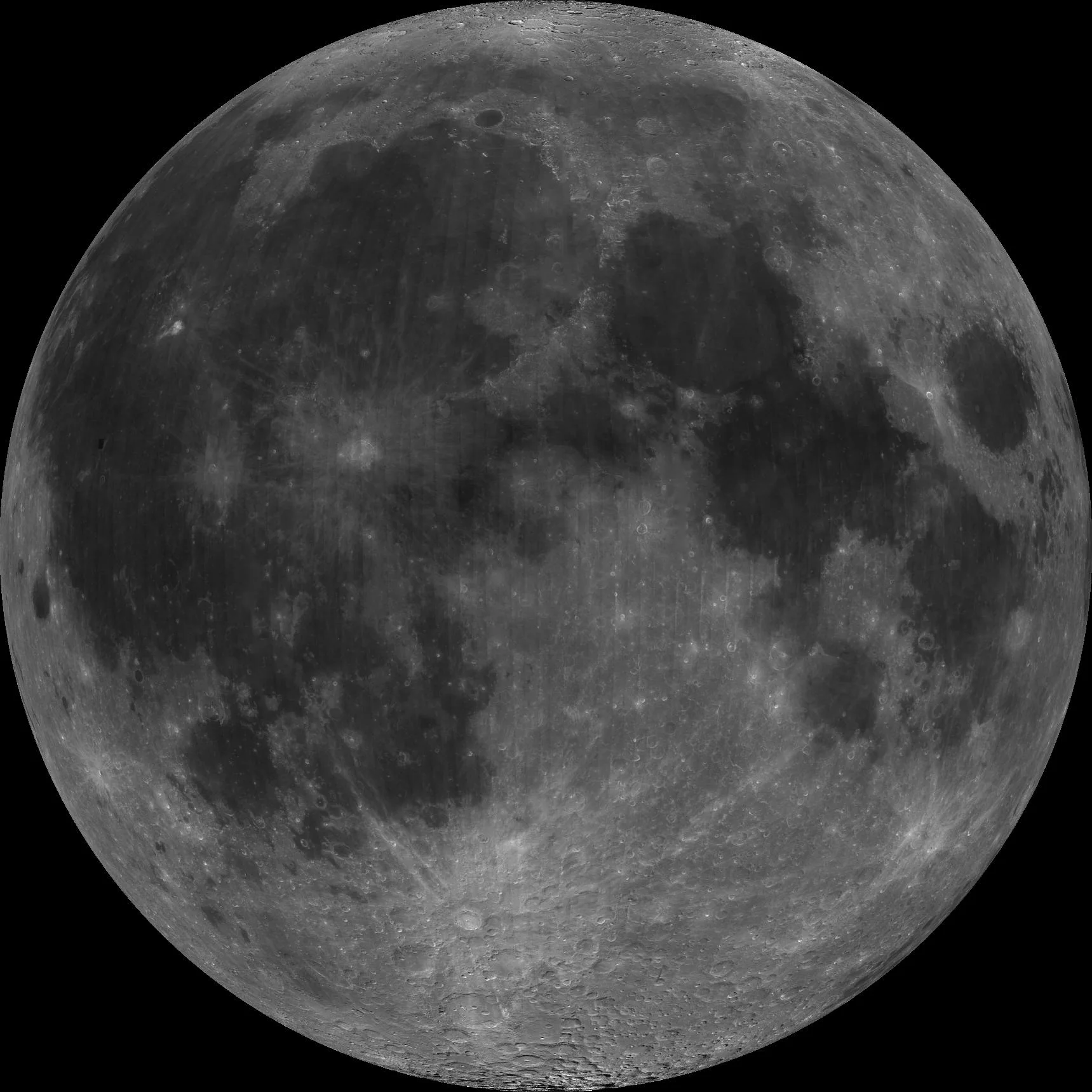
Sunlight feels warm. Moonlight feels like a different product entirely: silver, theatrical, faintly refrigerated. The independent-light theory begins in that difference. Maybe the thing above us isn't borrowing its glow. Maybe it is running its own night shift.
The independent-light theory treats the Moon as the source of its glow, not a surface borrowing sunlight. Its strongest version supplies a mechanism for the changing illuminated boundary and predicts the next phase. That is a more substantial claim than saying moonlight feels different.
The argument being tested—not a claim that the theory has been verified.A lamp with an unusually disciplined schedule.
The strongest version doesn't merely call the Moon luminous. It explains why the light occupies different portions of the disc at different times. Is something covering a lamp? Is the output changing across its surface? Pick the mechanism, then write down its next phase prediction.
The Naval Observatory describes the competing Sun–Earth–Moon geometry. That gives the independent-light proposal something specific to outperform. Sketch the lit edge and record the Sun's direction safely, without pointing optics at it. The shape of the light is a better witness than the mood it produces.
If a self-lit model predicts a phase or brightness relationship the reflected-light model misses, keep that result. If it needs to copy the same geometry exactly without offering another test, it has changed the name on the lamp without explaining the wiring.
Brightness isn't the mechanism.
The U.S. Naval Observatory explains the phases as the changing portion of the Moon's sunlit half visible from Earth. A self-lighting claim has to explain the same repeated relationship to the Sun, not merely describe the Moon as bright.
That makes position and phase more useful than an impression of cold or silver light. Our inference: reflected illumination is the simpler explanation of this coordinated geometry.
Follow the changing boundary.
Observe a crescent, a quarter and a gibbous Moon. Keep track of where the Sun is, without looking at it through optics, and note which way the illuminated side faces.
A flashlight-and-ball demonstration is an analogy for those relationships. It is not a claim that every detail of real lunar brightness is captured by a household sphere.
A luminous-looking disc is not necessarily a self-luminous disc. The phase geometry is a discriminating observation.
A TEST, NOT A DARE.
Sketch phase and Sun direction on several evenings. Predict the next phase before observing it. Never point binoculars or a telescope toward the Sun.
These are suggested exercises, not experiments we claim to have performed.
KEEP A PRIVATE FIELD NOTE ↗The Moon can keep its nightclub lighting. The source of the glow still needs a mechanism.
THE RECEIPTS / LINKS REVIEWED 25 SEP 2026
THE SOURCE SHELF.
Read the record, including its limits. A link to a claim documents what somebody says; it does not endorse it. Videos and social accounts open on their own sites—no embedded trackers or autoplay.
- Explainer / U.S. Naval ObservatoryPhases of the Moon and percent illuminated ↗
Sun–Earth–Moon geometry, phase timing and libration.
Open the original source-led case file for the evidence ledger, calculations and observation tools.
OPEN THE FIELD GUIDE ↗