The second menu.
Daytime objects know what they are for. A vending machine dispenses something. A diner feeds you. A pinball table keeps score. After midnight, the same objects seem to acquire a second menu. The lights are softer, the room is emptier, and an ordinary detail gets enough space to become a small world.
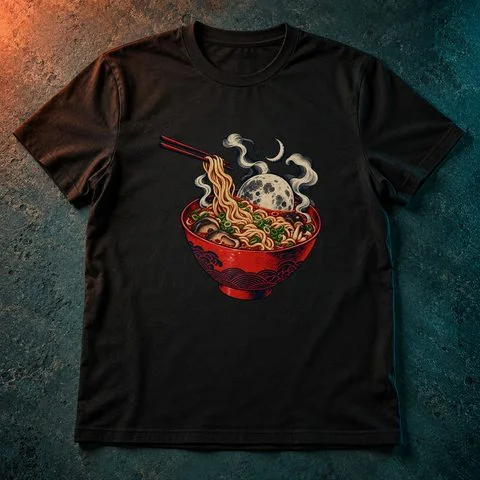
Midnight Ramen begins with a beautifully unreasonable substitution: a cratered Moon where an egg might have been. The noodles remain noodles. The bowl remains a bowl. Most of the scene behaves itself, which makes the one impossible ingredient feel much more satisfying. You can recognize dinner and lose track of scale at the same time.
Let the Moon have a night off.
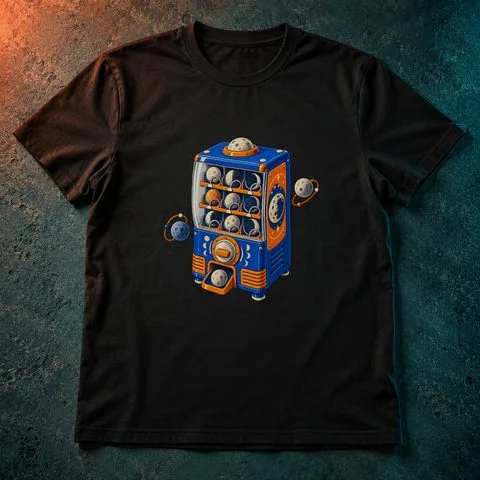
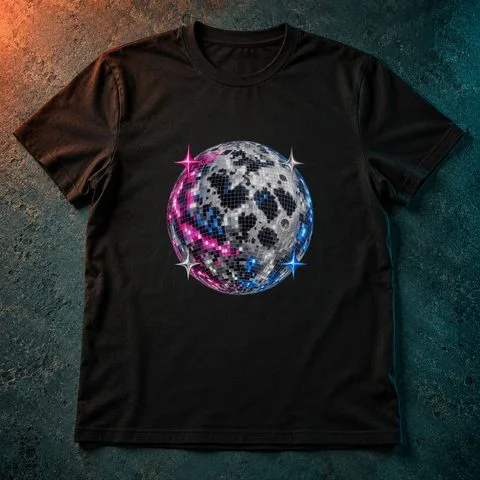
Lunar imagery often arrives carrying a very large assignment. Explain the universe. Prove the conspiracy. Symbolize an entire emotional life. Sometimes it deserves a smaller role. Be a disco ball. Be the prize in a machine. Bounce through an arcade with no responsibility beyond the next light.
These designs keep the familiar lunar surface and give it somewhere unexpected to go. A Moon made entirely abstract can become almost anything. A recognizable Moon inside a red ramen bowl has to negotiate with both its identities. That little friction is where the joke lives. It is also where a wordless print gets its staying power: the viewer has to finish the sentence.
A scene you can step into.
The collection's diner is an invented place assembled around the print: rain on the window, warm lamps, aqua reflections, a booth with enough room to settle in. The artwork doesn't need the scene to explain it. The scene gives you a feeling for the hour it belongs to.
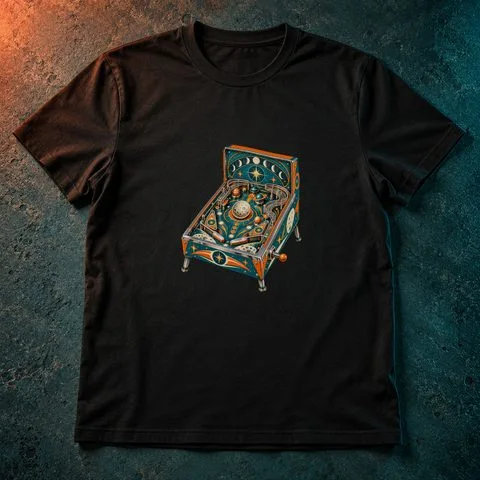
That is how we want the objects to work outside a photograph, too. The tee can carry a tiny late-night dinner into a perfectly ordinary afternoon. The pinball image can suggest motion while you are standing still. Wearable art is allowed to have a private atmosphere. It does not have to announce a message to the entire room.
Take the long way home.
There is a difference between collecting a celestial fact and noticing a celestial presence. One gives you a number, a name, or a useful correction. The other catches you at the wrong end of a long evening, above a road you have walked a hundred times. Both kinds of attention belong here.
Midnight Objects is for the second encounter. The strange meal, the bright machine, the last dance: little reminders that the night is still available for interpretation. Finish dinner. Play the game. Look up on the way out. Nothing in the collection requires a dramatic conclusion. The Moon is already making the ordinary route a little less ordinary.